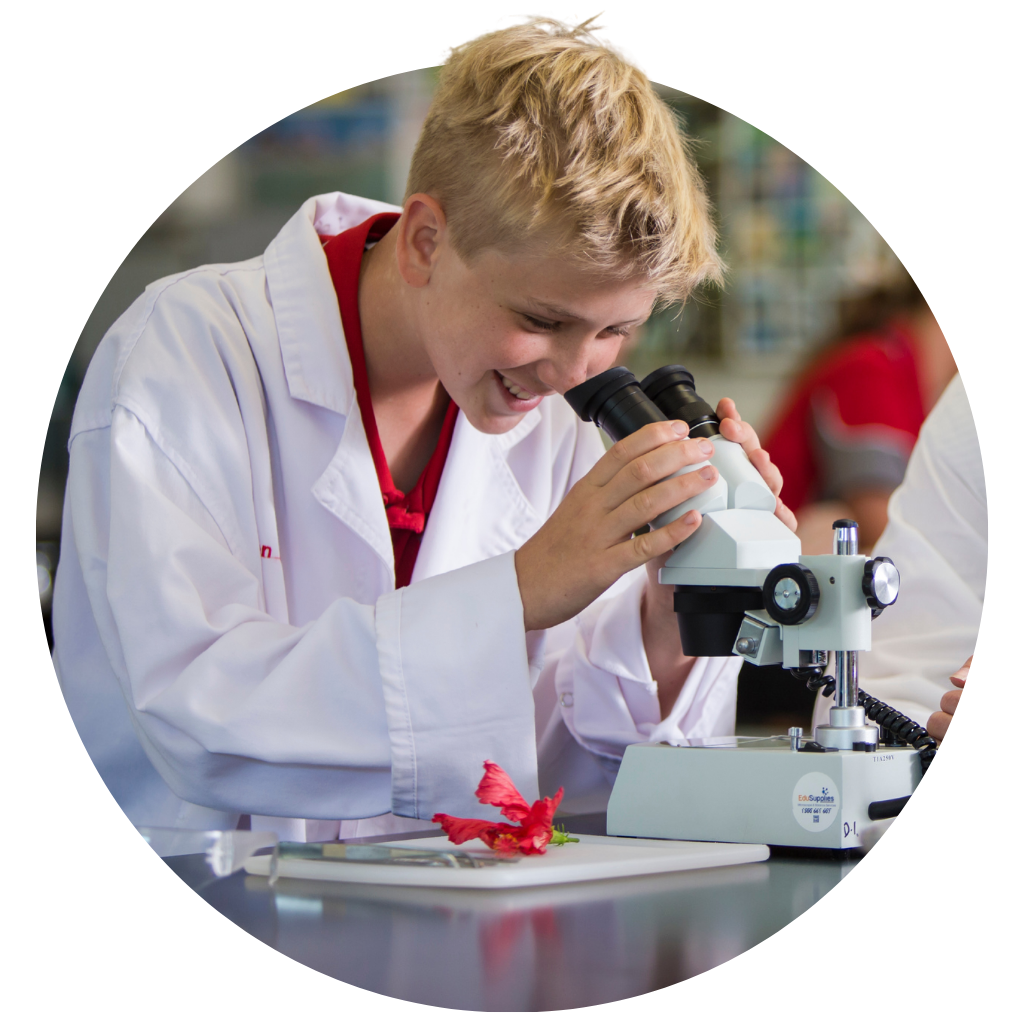
From Year 7 to Year 10, Science is designed to grow students’ curiosity about help them think like scientists. Across these years, students build knowledge in biological, Earth and space, physical and chemical sciences, while also learning how science works through investigation, questioning, analysing evidence and communicating indeas clearly. The curriculum is intentionally built around 3 connected strands — Science understanding, Science as a human endeavour, and Science inquiry — so students do not just learn facts, but learn how to explain, test and use ideas in real life.
In Years 7 and 8, students explore the world in more structured and connected ways. They begin to see how systems work — such as ecosystems, body systems and Earth systems — and how patterns, change, matter, energy and measurement help explain what they observe. As they move into Years 9 and 10, their thinking becomes more abstract and sophisticated. They are expected to ask deeper questions, analyse data more carefully, evaluate evidence, and apply their learning to bigger issues such as sustainability, emerging technologies a:nd the protection of biodiversity.
Science aims to develop scien.tifically literate young people who can solve problems, justify claims with evidence, make informed decisions, and understand how science shapes society and future careers. It also encourages students to recognise the contributions of First Nations Australians and to see science as a powerful way of understanding and caring for the world around them.